
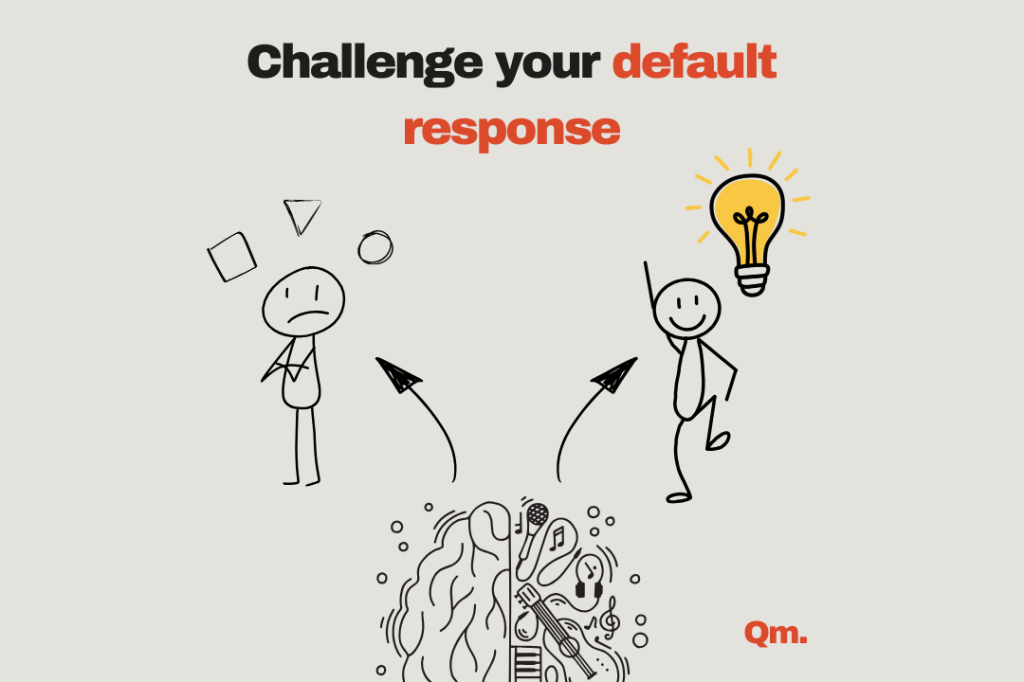
Doing brainstorms is a very classic part of the ideation process and can be an incredibly powerful tool in helping generate a host of ideas that gets everyone excited about the art of the possible. But are they really new ideas? Or do they tend to come from the same places that have already been explored?
The reason this happens isn’t necessarily because you aren’t doing it properly – it is down to the way that we are wired. Our neural networks lead us almost instantly to thoughts, reactions, behaviours that our survival brains have already validated as “safe paths” based on our past experiences, assumptions and biases. And because this is happening largely in the sub-conscious, we are consequently often blind to our own assumptions. And the older we get, the more inflexible we become, sticking to the same well-trodden paths that have gotten us safely to where we are today.
So how can we come up with genuinely new ideas? Well, this takes a little bit of effort but according to Dr Beau Lotto, Professor of Neuroscience at the University of London, in his fantastic book Deviate, it is possible to change your future past assumptions. I know it sounds a bit crazy but stay with me.
It comes down to asking open-ended questions that focus on learning that invoke further exploration of ideas and insights, rather than finding quick answers. The more we can be curious and open-minded, then we have half a chance to stop and consciously challenge our initial default responses, rather than assuming we have already figured out the answers and follow the same paths.
This can be enhanced dramatically by bringing in different perspectives – thinking from diverse backgrounds, people in different roles across the business, a gender blend, a span of ages. Also, a great reason to be more collaborative and engage those that are closer to the action into the conversation!
We can be more open to new perspectives if we are brave enough to individually and collectively explore and experiment. Listen to others, refrain from judgement and build on themes rather than closing doors and shutting things down. Widen the frame of reference to places that can feel uncomfortable. That is how we grow as individuals and work better in teams, by extending our neural networks and start to change our future past assumptions.
For additional reference I have included Beau Lotto’s formula for creativity:
1. Be aware that creativity can’t be studied and replicated. What you are in control of is the biases and assumptions that control your next most likely moves and possibilities.
2. Change the space around you and adapt into it. Use diversity to discover your biases and be aware that they have momentum. Change is difficult and risky.
3. Make small steps and be patient.
4. Work on having the right questions before you concentrate on finding answers. Good experiments create learning but poorly designed ones don’t.
5. Focus on developing a sense of caring about issues. This leads to a path to discovery powered by the intrinsic rewards that people get from this.
Are you are struggling to get cut-through on an elusive problem or want to try a different approach to explore an ambitious opportunity? 🌟
#ChangingFuturePastAssumptions #ExplorePower #GrowthMindSet #BecomeCurious


 Quadrivium
Leave a comment